Why route optimization matters so much
In distribution, most of the cost sits in the final leg of delivery. According to the Capgemini Research Institute, the last mile represents 41% of total supply-chain costs, and 97% of organizations believe current models are not sustainable at scale without automation. Every needless kilometre eats straight into margin.
The good news: optimization tools, long reserved for large integrators, are now within reach of SMEs through SaaS platforms like dropfleet.
Three concrete cost levers
1. The 2-opt heuristic
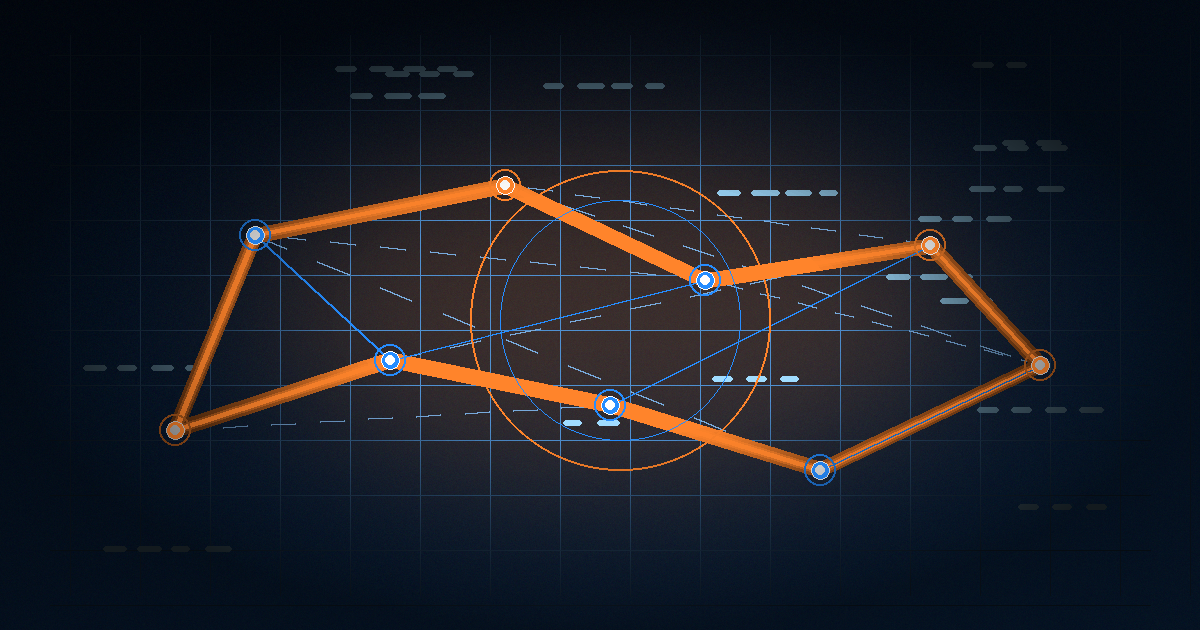
Planning an optimal route is an NP-hard problem: the vehicle routing problem (VRP) reduces to the travelling salesman problem, for which no fast exact algorithm exists at scale. So we use heuristics. The best known, 2-opt, was proposed by Croes in 1958: it removes two segments of a route and reconnects them differently as long as total distance falls.
2. Geographic clustering
Before sequencing stops, group addresses by area. A driver shuttling between distant neighbourhoods isn't fate. It's a zoning problem. Assigning each route to a coherent area mechanically cuts unproductive kilometres.
3. Time windows
Deliveries with no time slot are the easiest to optimize. As soon as you negotiate 2-hour windows instead of a fixed time, you give the optimization engine flexibility that turns into kilometres saved and extra stops per route.
What market analyses say
Beyond theory, industry analysts (fleet management, telematics) report fuel reductions of around 10 to 30% from route optimization, idle reduction and driver-behaviour monitoring. These ranges vary widely with route density and your starting point. Measure your own situation first.
In practice with dropfleet
On dropfleet, optimization is built into the dispatch console. In one click the system re-sequences stops and shows distance before/after. Drivers receive the optimized route on their PWA app, with no re-entry.
Where to start?
If you don't have a tool yet, start by measuring: export the month's routes (addresses, actual order, kilometres) and compare with an optimized sequence. The gap is your savings opportunity.
- The last mile = 41% of supply-chain costs (Capgemini)
- The VRP is NP-hard: optimize with heuristics like 2-opt (Croes, 1958)
- Clustering by area is the first move
- Analysts report 10–30% fuel savings depending on the case
Ready to optimize your routes? Try dropfleet free for 14 days, no credit card, ready in 5 minutes.
Sources
This article is based on verifiable public sources: